
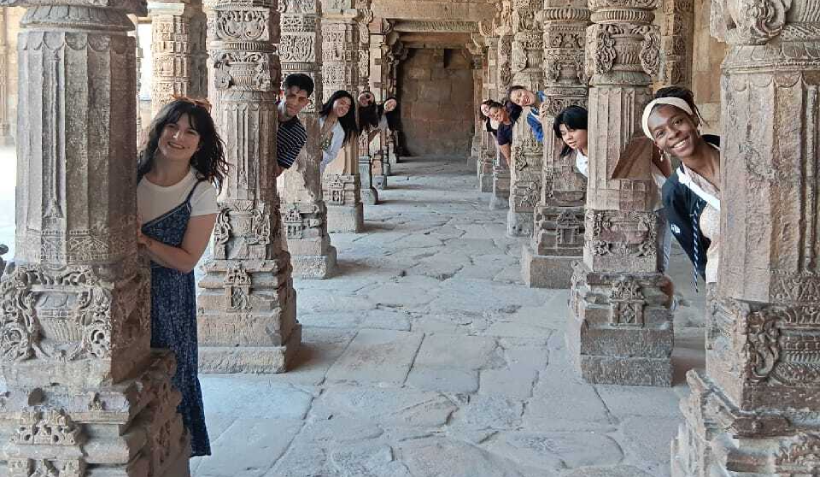
Learning Outcomes-Focused Travel: When Journeys Transform How You Think and Act
I have curated travel for long enough to know this: most people don’t remember how many places they covered. They remember the one conversation that rearranged their thinking – the moment that made them ask better questions, and the experience that stayed with them in ways that went beyond their photo albums.
At Breakaway, that’s the kind of travel we care about designing: learning outcomes-focused journeys. Experiences where the takeaway isn’t souvenirs or bragging rights – it’s perspective, vocabulary, empathy, and a clearer understanding of how real change is built (slowly, imperfectly, on the ground).
This is what we often call Journeys with Purpose. And no – it’s not voluntourism. It’s not poverty tourism. It’s not a feel-good detour where you ‘visit an NGO’ and then head out for cocktails. If anything, it’s a kind of ravel that holds you to a higher bar.
Why we design around learning outcomes
Because when travel is centred on learning, it becomes more honest.
You stop looking at a destination as content. You start paying attention to systems: livelihoods, waste, education, health, craft economies, migration, disability access, ecology, and community leadership. You begin to see how good intentions can go wrong and how thoughtful design can improve things.
For corporate groups, student cohorts on study abroad programs and immersions, and families raising deeply curious teenagers, these journeys are a genuine reset. They move teams from shareholders to stakeholders — not as a slogan, but as a lived understanding. If you are part of these groups, our approach is designed for you.
What learning outcomes look like in real journeys
Here are a few examples of the kinds of interactions we build :
Grassroots enterprise and the economics of dignity (Himalayan valley edition)
Imagine spending a few days in the hills meeting a constellation of community-led initiatives through our Grassroots India journey. It is designed to reveal how dignity, livelihoods, and resilience are built quietly, far from the spotlight.
- A child development centre working with children with disabilities, where you learn what it takes to build trust in remote communities – and why care work is both emotional and operational.
- A women-run collective sustainably harvesting wild forest produce in season, where conservation and livelihood aren’t separate conversations – they’re the same one.
- A school started for village children, quietly shifting life trajectories.
- A social venture making nutrient-dense foods from local grains, seeds and fruits – a reminder that local can be innovative, not just nostalgic. (Navdanya (NGO), 2025)
- A craft-based enterprise that upskills rural women and restores indigenous skills to economic relevance and financial independence, which, in itself, is a game-changer.
- A mountain clean-up/waste management initiative that forces you to confront the reality of tourism’s footprint – not abstractly, but on the very trails people come to experience purity. (Singh, 2020)
The learning outcome here isn’t just inspiration. It’s a deeper challenge: how do change-makers build resilient models that are mostly bootstrapped? What does it mean to design livelihoods that stem migration? What does ethical enterprise look like on the ground? What assumptions do you hold about local economies and their capabilities? By questioning these, we confront biases and open ourselves to more meaningful connections.
Let’s move to another context: sustainability. Consider Jaipur—not the city you think you know, but a new perspective on sustainable practice.
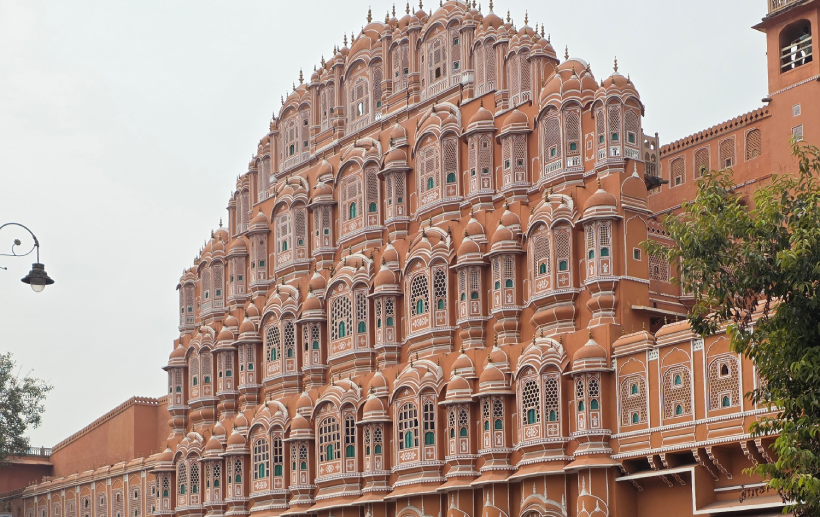
Sustainability is a word that gets used lazily. We design city-based sustainability tours that make it concrete: initiatives that build around reuse, reduce, recycle, repurpose, fair practices, and smarter design choices.
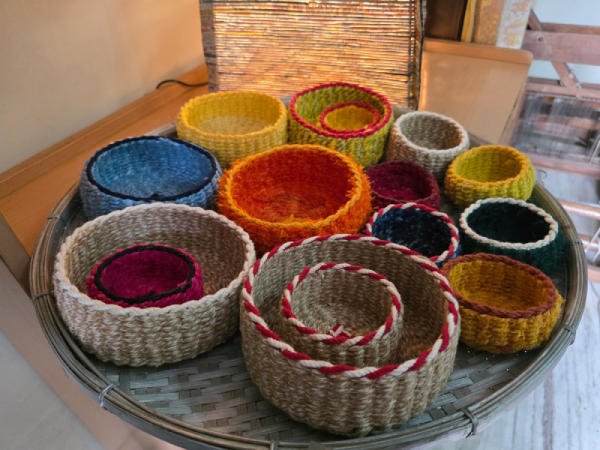
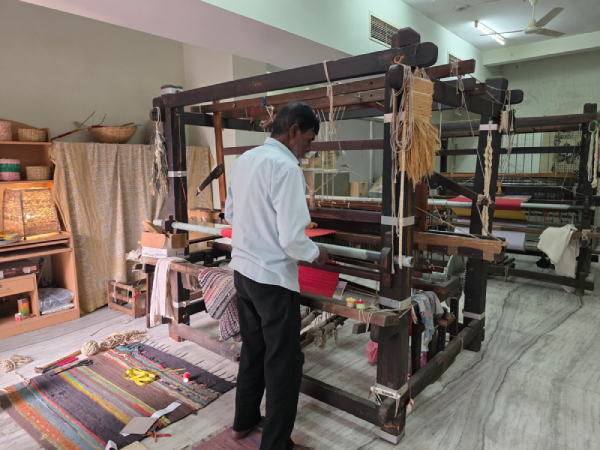
The learning outcome is practical: how does waste become a material? What does circularity look like in India, where hand-me-down and upcycling existed long before sustainability became a buzzword? What changed with fast fashion and convenience culture, and what’s being rebuilt now? We infuse experiences and interactions that give you a 360-degree perspective on how circularity-based design principles translate into tangible products.
This kind of tour doesn’t ask travellers to be saints. It asks them to just be awake.
Now, think about student travel as a live classroom—journeys where learners encounter unfamiliar contexts, and real adaptation unfolds.
I have a soft spot for student cohorts because they arrive open – and because India can be both fascinating and exhausting if you don’t design the arc well.
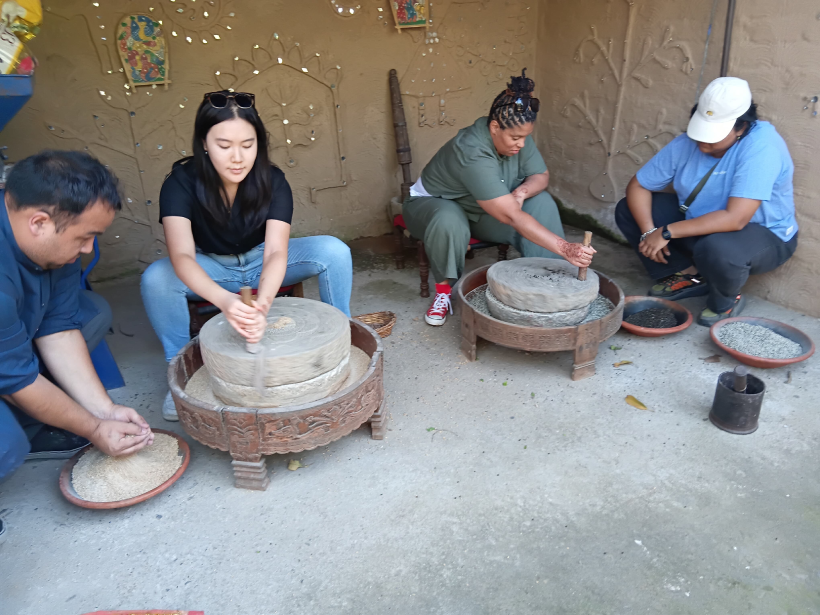
In one such concept, the journey is structured as an exercise in sensitivity and method:
- Big-city immersion where contrasts hit you in the senses (and challenge your reference points).
- Workshops alongside local youth, using guided exercises to exchange perceptions – not as charity, but as mutual discovery.
- A few days of shoulder-to-shoulder work with a social group building housing/facilities, where teamwork and humility become the real language.
- And then a deliberate assimilation chapter – a quieter landscape where students can breathe, reflect, and let learning settle.
The learning outcome here is not seeing India. It’s learning how to observe, interpret, adapt your process, and stay human in an unfamiliar context.
How we curate these journeys at Breakaway
We curate the arc
Learning outcomes don’t happen by accident. They have to be designed and co-created with the social organisation to ensure commitment and buy-in from both parties. For instance, in one of our collaborations, an NGO preferred to focus on authentic engagement over staged photo opportunities, reinforcing the importance of genuine partnerships. Every such journey needs chapters: orientation, immersion, deeper engagement, reflection, integration. If you skip reflection, you lose half the value. Without reflection, insight evaporates in the airport lounge. This succinct warning emphasizes how essential it is for travelers to embrace the slower pace required for meaningful experiences.
Every journey needs chapters: orientation, immersion, engagement, reflection, and integration. Skipping reflection means losing half the value.
We have domain experts lead these interactions, not tour leaders. People who add context, ask the uncomfortable question gently, and help the group make meaning without turning people’s lives into a case study. Take, for example, someone like Asha Nair, a former waste-picker turned circular-economy consultant, who draws from her own experiences to offer insights that transform understanding into action.
We protect dignity.
We don’t visit staged setups. We don’t treat communities as exhibits. We enter with consent, respect, and clear boundaries. We are mindful of their time and challenges. And we don’t promise impact in a weekend.
We build in debrief.
Evenings often include simple reflection and conversations. What surprised you? What challenged you? What will you do differently when you go back? That’s where learning becomes personal.
We leave guests with the next step.
A good purpose journey doesn’t end with emotions. It ends with clarity – small, specific starting points that are realistic.
If you want travel that is beautiful and intelligent, yet stark – travel that pushes your boundaries and puts you out of your comfort zone – this is for you. If you’re a corporate team trying to align leadership with values, a student group seeking real-world exposure, or a traveller who wants your curiosity to be taken seriously, we can build you an itinerary you will unpack over a lifetime.
At Breakaway, our journeys help you truly engage with how India works, creates, and innovates. We believe travel should transform your perspective and leave you more responsible in how you move through the world.
